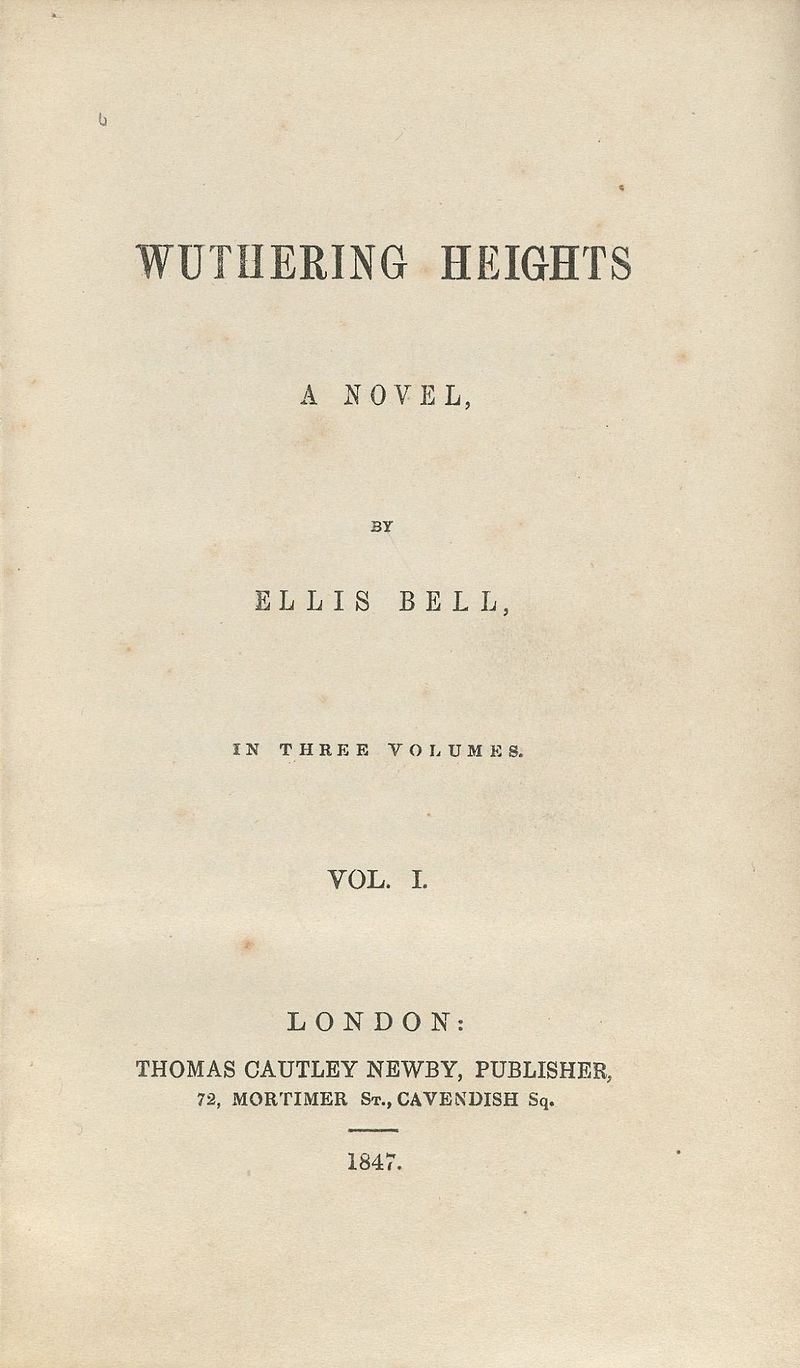
The score(s) next to each publication’s review and the average rating is an interpretation of the reviews by Literature’s Pretty Long History.
Critics:
“Jane Eyre was followed by “Wuthering Heights,” a work in some respects quite as extraordinary, but not so agreeable. There were traits of Salvator, brigand nature, and rude mountain scenery, but with scarcely a ray of sunshine.”
“Not very long ago a very smart work appeared under the title of “Jane Eyre;” one which excited, and deservedly, much attention ; shortly afterward “Wuthering Heights, by the author of Jane Eyre,” was published; but so inferior was the latter, that many confidently expressed the belief that it was by a different author, and that the name of “Jane Eyre” was plagiarized merely to assist the sale.”
“With these varied and very unequal romances we have nothing to do at this time, and will only say that the first is also the best.”
“It’s a capital book, by the way; an improvement in rhetoric upon Wuthering Heights, and vastly superior to Jane Eyre in morals.”
“This work is inferior to Jane Eyre, and better than its immediate predecessor, Wuthering Heights.”
Supplemental Notice(s)
Reprinted by The Union (August 19, 1848)
“The present work seems to us to hold a middle place between Jane Eyre and Wurthering Heights. It is inferior to the first, and greatly superior to the second. It is a simple, straight-forward tale of courtships and marriage; told generally with power and point, though sometimes sinking into prolixity.”
“Wuthering Heights was an extravaganza, a Walpurgis night, a dance of devils and witches on the Brocken. The incidents were improbable, the characters, without exception, detestable or contemptible. Still, it was no common place affair. The author drew everything with the magic pencil of genius. True, his picture was revolting. So was Dante’s Inferno; but still it was attractive.”
“This work, is in style, altogether different and more pleasing that which characterized “Wuthering Heights.” It is a finely-written fiction, and will take rank with Currer Bell’s interesting novel—”Jane Eyre.””
“Wuthering Heights provoked more conflicting opinions than perhaps any similar production of the times; none, however, deny to the author the attribute of a high order of genius.”
Reprinted by New York Morning Express (July 27, 1848)
“Mr Livermore has shown much judgment and taste in his selection, and we would advise all, who have spent most of the spring in reading Jane Eyre, and Wethering Heights, and commenting upon their beauties and imperfections, to dispense with such useless reading for the present, and pay some attention to the standard works of literature.”
“In one respect it resembles the new English tale of “Wuthering Heights,” it has great strength and power, but no beauty.”
“Both these works are drawn from profound experience of evil and suffering. We are assured the autobiography of the writer would be more marvellous, more touching, more interesting, than either of the fictions, the shows, the symbols, before us.”
“Yet we think the later production, as a whole, inferior to the first. It has not the same breadth and variety.”
Reprinted by Barre Patriot (May 12, 1848)
“It is written with wonderful power, and on this account will doubtless be widely read. While we are glad for the reputation of the author that this is so, we are sorry for the reader. Such works can exert no good influence, and the sooner they pass from our shelves and our memories the better. If they portray any nature at all, it is that of demons and not of men.”
“Want of room compels us to omit a review of the work, now in manuscript, till next week.” — Excelsior (April 29, 1848)
“Notwithstanding all our objections, there is no denying that the author is a man of talent.”
“The celebrity of this new candidate for literary fame, will cause the present new production to be eagerly sought after.” — The Albion (April 29, 1848)
“The “Tenant of Wildfell Hall” is full of absurdities and improbabilities, and the man who could write “Wuthering Heights” could have written a tale very far superior. His talents are misapplied.”— The Albion (August 5, 1848)
“It has the vigour of “Wuthering Heights,” with more truth in one of its pages than can be found in whole of that vaunted work.” — The Albion (December 9, 1848)
“Both the books bear evidence of considerable intellectual power, but their tendency is decidedly immoral and vicious—the characters, particularly in Wuthering Heights, are diabolical and fiendish to a degree that we have never before seen portrayed by a writer of fiction, or heard of in real life.”
“Wuthering Heights is a shaking sort of book, but it is the production of a man of genius.” — Morning Express (August 3, 1848)
“In spite of the disgusting coarseness of much of the dialogue, and the improbabilities of much of the plot, we are spellbound.”
“In “Wuthering Heights,” all his far-descended demi-noblesse of the north of England would be out of place in a decent American kitchen.” — The Literary World (August 12, 1848)
“This is a strange compound of deformity and beauty–of horror and joy. It is strikingly unique, but by no means natural.–The characters, many of them, are overdrawn, and the best unpleasantly defective. The conception of the work, however, displays an original mind; and its perusal will afford a few hours’ pastime to many thousands who are only attracted to this species of literature by some rare production. “Wuthering Heights” is the successor of “Jane Eyre;” and while it may exhibit as much talent, it is by no means as agreeable.”
“This is the awkward title of a novel by the author of “Jane Eyre.” The HARPERS’ have sent it out in a neat garb; and, if it sustains the reputation which its author has acquired from his first effort, it will have a run.”— Albany Evening Journal (April 21, 1848)
“It appears to us to have been written to prove that an interesting book can be composed upon most imposing characters; for the perusal traits of most of them strikes us as repulsive, and their combinations most unnatural. Public opinion seems to have suspended judgment for further testimony, and “Wuthering Heights” by the same author will go far to turn the balance one way to the other.”
“A most strange and mysterious story, calculated to excite any other feelings than those of pleasure; interesting, it certainly is, but the interest is not a pleasing one. The story is connectedly told, and the characters are well and vividly pourtrayed; but we cannot say that the sketches of the strong, hardened in wickedness, and of the weak, led away into sin, are subjects of pleasing interest.”
““Wuthering Heights” certainly possessed all the faults of “Jane Eyre,” but in a more aggravated form, and had none of its beautiful freshness. It was sometimes striking, and certainly never common-place, but it was not agreeable.”— The Economist (July 15, 1848)
Average Rating
Latest