The score(s) next to each publication’s review and the average rating is an interpretation of the reviews by Literature’s Pretty Long History.
Critics:
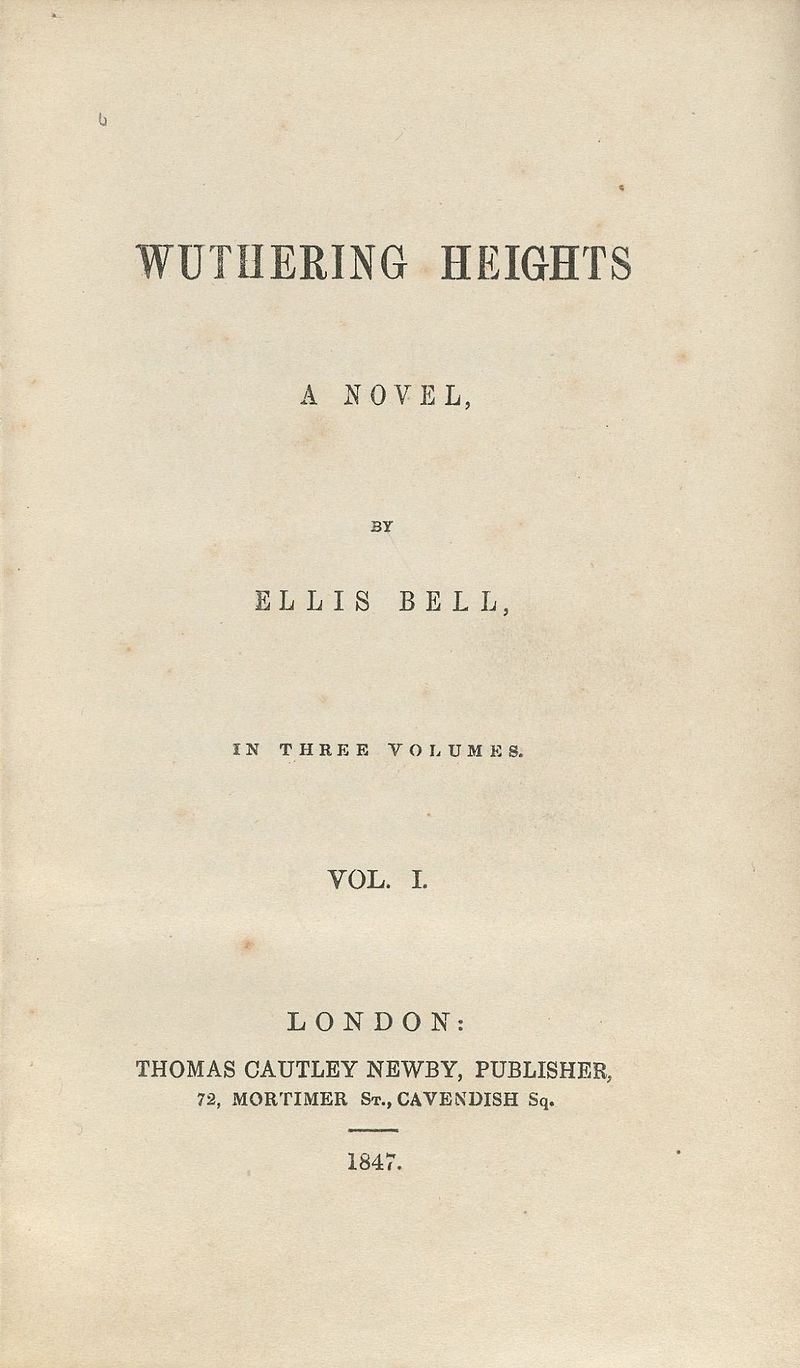
“THE name of Bell is familiar to the readers of fiction by the interesting works of “Jane Eyre,” “Wuthering Heights,” and “The Tenant of Wildfell Hall,” each of these being the production of one of these brothers, and all of them, but particularly the first work, having raised their name to a very prominent position in our popular literature.”
“We have received from the Messrs. Harpers, through Mr. Morgan, of the Literary Depot, a copy of “The Tenant of Wildfell Hall,” by Acton Bell, author of the extremely clever novels, “Wurthering Heights” and “Jane Eyre;” also the first part of “Vanity Fair; a Novel without a Hero,” by Thackeray; also the sixth part of “The Thousand and One Nights,” beautifully illustrated; and “The Young School Mistress,” by Joseph Alden, D. D.”
Supplemental Notice(s)
“We have received from Harper & Brothers, the New York publishers, through J. S. Morgan, “The Withering Heights,” a novel, by the author of “Jane Eyre;” “The Children of the New Forest,” by Capt. Marryatt, and volume one of “The Swiss Family Robinson—second series.”” — The Times-Picayune (May 24, 1848)
“We are indebted to B. M. Norman, No. 16 Camp street, for the “‘Tenant of Widlfell Hall,” by Acton Bell, the author of those popular novels, Jane Eyre and Wuthering Heights. If it is like his other books, this must be a deeply exciting novel.”
“It is published in the same neat style as “Wuthering Heights.””
“INTERESTING NEW WORKS.” — The Home Journal (May 20, 1848)
“ANOTHER new work by the author of “Jane Eyre,” has been announced in London.” — The Home Journal (June 17, 1848)
“The writing of this author are too original and peculiar to be slurred over, or pronounced upon without a careful reading. Wuthering Heights is a shaking sort of book; but it is the production of a man of genius.”
““Wuthering Heights,” the second novel of the author, is a work of entirely different character, but it no less certainly chains the attention of the reader.”
“The volumes before us appear to have all the attractive qualities of the authors former works and are superior to them in its plot and machinery.”
“The scene is laid in England.” — Brooklyn Eagle (April 22, 1848)
“Our notice of this extraordinary work has been unintentionallo delayed. It is an extraordinary work in several respects. First, it is written with great power–the reader feels that the pen is in the hand of a master. Secondly, it presents a group of most impossible characters, and a tissue of most improbable events–yet, thirdly, it possesses an interest, which almost amounts to fascination; and the reader is oompelled to proceed, while his whole uature revolts against the details of the narrative as they are successively presented.”
“But none can dispute the genius and dramatic power apparent on every page of Wuthering Heights and which render the book as a whole no less a work of art, because its characters are debased, than in sculpture is the renowned group of the Centaurs and Lapithae.”
“Wildfell Hall not only sustains, but enhances the reputation of its author, uniting all the good qualities of Jane Eyre and Wuthering Heights, without their exceptionable features.” — Newark Daily Advertiser (September 14, 1848)
“Shirley is unexceptionably a moral tale; free from whatever was questionable in Jane Eyre, or revolting in Wuthering Heights, and quite equal to either in its delineations of character; while it surpasses both in descriptive beauty, healthy sentiment, and sound philosophy.” — Newark Daily Advertiser (December 2, 1849)
“One takes up the book and instantly becomes rivetted—goes through with it, perhaps, at a single spell, and then throws it down with a silent imprecation on the sordid taste that could select a theme so execrable; and the vitiated imagination that could derive its nourishment from the rank growth of depraved and degraded humanity.”
“We have been taken and carried through a new region, a melancholy waste, with here and there patches of beauty; have been brought in contact with fierce passions, with extremes of love and hate, and with sorrow that none but those who have suffered can understand.”
“The characters are, with scarcely an exception, of the most wicked and repulsive stamp; while the tale is told with such a power of delineation, such a strange fascination of interest, that one cannot choose but read, though it be with a shudder.”
“We experienced a shudder of something like horror as we took it up, with the recollection of Heathcliff’s brutality and passion still vivid in our mind.” — The Union Magazine Of Literature And Art (September 1848)
“Also, Wuthering Heights, in two volumes, by the author of Jane Eyre. This latter work attracted great attention, and the present one from the same author is not less interesting and instructive. We see it extensively and most favorably noticed by the Northern press.”
Reprinted by The Daily Delta (May 25, 1848)
“This is a work of unquestioned power and exciting interest, though some of the characters are rather unnatural, and too strongly drawn. For power of imagination and versatility of genius, it is one of the most remarkable novels of the day—though it is, take it all in all, a strange compound.”
“The entire work is indeed a strange compound of morbid sentiment and gloomy representation, yet it possesses the merit of being from the pen of the author of Jane Eyre, highly commended by the literary public.”
“In “Wuthering Heights” the women are on the whole superior to those of “Jane Eyre,” and we really are at a loss to understand those of our contemporaries who have wrote them all down as demons.”
““Wuthering Heights” is a strange title, and the book, according to the English notices, is as enticing as “Jane Eyre.”” — Boston Daily Times (April 20, 1848)
“We have received from Redding & Co two exceedingly neat volumes, elegantly printed, of this novel by the author of Jane Eyre, from the press of the Harpers. It is said to be of thrilling interest.” — Boston Daily Times (April 22, 1848)
“The characters possess none of that total depravity interest that is to be found in the fiends that fill the pages of “Jane Eyre,” “Wuthering Heights,” and “The Tenant of Wildfell Hall;” and, as the author can only draw characters that possess something more than a spice of the devil in them, so as to excite interest, his (or her) heroes and heroines, in the present instance; are, with one or two exceptions, dull people enough.” — Boston Daily Times (November 24, 1849)
“The new book is “Wuthering Heights,” it is certainly a very queer affair, and altogether original.”
“Well, every body here has been talking of “Jane Eyre,” and now every body is beginning to talk of “Withering Heights” by the same author, (or authoress?). One thing there’s no denying: the books are original in their view and characters–the old stereotyped novel parts are, in them, thrown overboard. This is very refreshing; for the world has grow a little tired of those same ancient ladies and gentlemen.”
“The celebrated novel, “Wuthering Heights,” by the author of Jane Eyre, and the “Children of the New Forest,” by Capt. Marryatt, can be obtained at Morgan’s.” — The Daily Crescent (June 27, 1848)
“This Novel is issued in a handsome style, and will be read by all readers of Jane Eyre. Though it not equal to that work, it is powerfully written and opens singular scenes and characters that carry the attention along to the end.”
“This is a strange book indeed. The author displays extraordinary talent—great powers of conception and delineation; and by means of these has clothed with a kind of interest characters of the most revolting and unnatural kind.”
Reprinted by Spectator (May 4, 1848)
“A work of the school of “Jane Eyre” and “Wuthering Heights” is not likely to be faultless, though it is almost sure to be widely read.” — Commercial Advertiser (July 31, 1848) and Spectator (August 3, 1848)
Average Rating
Latest